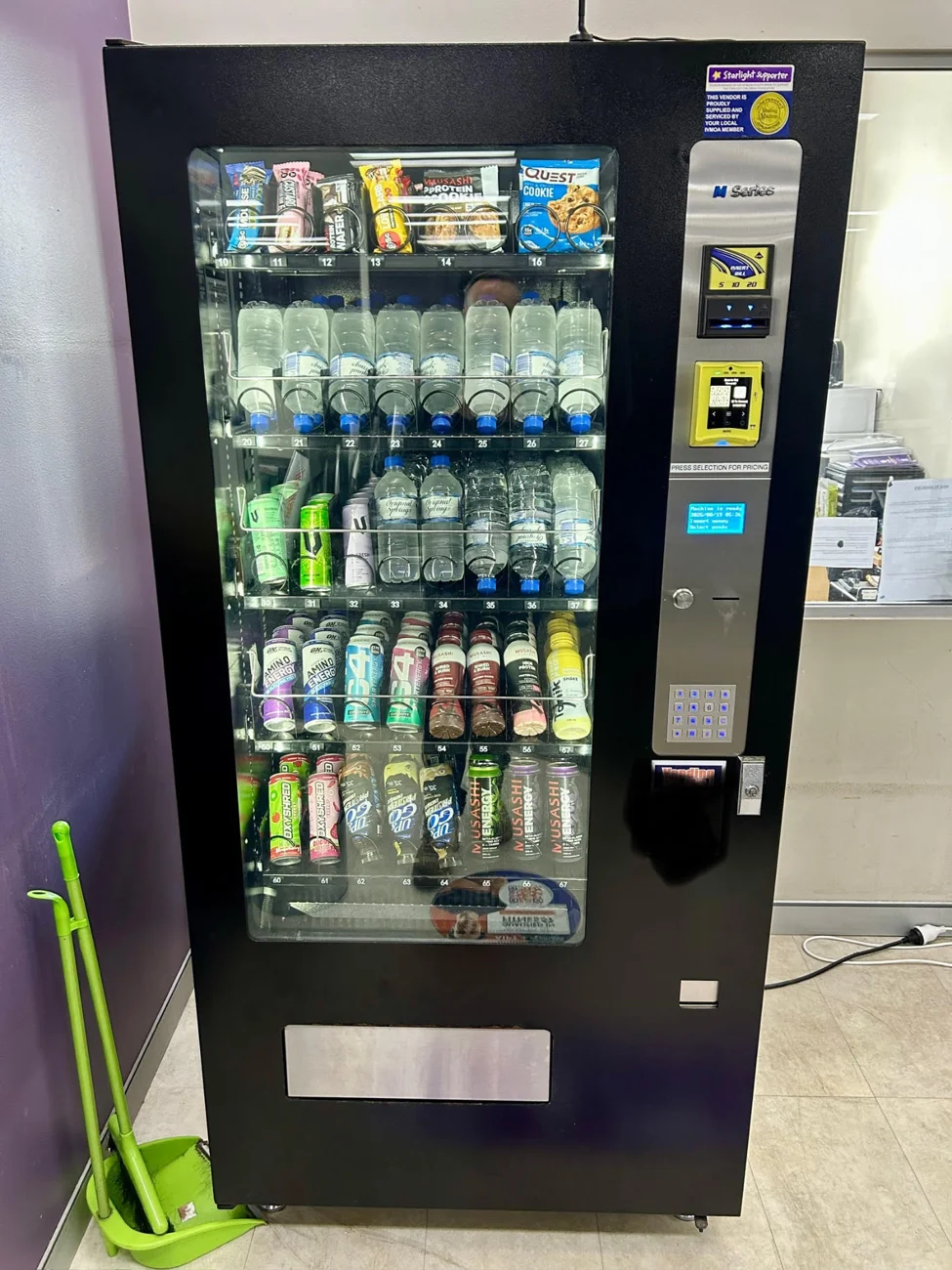
Count users before comparing cabinets
List the people who can actually reach the proposed machine during each shift. Separate staff, visitors and public access. A large organisation may have a small usable audience if the cabinet sits behind a locked door or in a remote building. Record operating hours, nearby food options and whether people can leave the site during breaks. These details influence both the expected product range and the practicality of operator-managed placement.
Ask users which drinks and snacks they would buy, but treat a survey as a starting point rather than guaranteed sales. Once installed, compare feedback with actual transactions and adjust stock allocation. Do not choose an oversized cabinet solely because a national sales forecast looks attractive.
Compare usable capacity, not selection count
A combination machine can offer drinks and snacks in one footprint, while separate cabinets may provide greater capacity for a busy location. Ask how many units of the popular products fit behind each selection. More buttons do not necessarily mean more usable stock. Confirm compatibility with the actual bottles, cans and packets you intend to load, preferably with a vend test.
Fresh meals require a different assessment from shelf-stable packaged snacks. Ask for temperature controls, fault behaviour and safe handling procedures for your intended range. Check refrigeration operating limits and ventilation requirements. A glass front or a chilled cabinet alone does not establish that equipment is suitable for every type of food.
Compare who owns and who operates
Free placement is assessed for the site and available service route; it is not an automatic entitlement or free products. The operator earns from purchases and manages responsibilities under the agreed arrangement. Buying a new or refurbished machine gives you ownership and the takings, but stocking, payment charges, cleaning and repairs still need a plan.
For a refurbished cabinet, request condition photographs, a dispensing test, payment-reader compatibility and details of warranty or support. With lease-to-own funding, compare the full repayment schedule, fees, total payable and end-of-term ownership conditions. Approval depends on the applicant and agreement; avoid treating an example repayment as an approved offer.
Obtain the delivered cost and service plan
Measure doorways and lifts before finalising equipment. Tell the supplier about stairs, loading restrictions, power, inductions and access hours. Request separate quote lines for the machine, payment hardware, freight, positioning, installation, service and GST. Confirm whether ongoing subscriptions and transaction fees apply.
Keep the supplier's written answers with the purchasing decision. Confirm the named breakdown contact, postcode coverage, exclusions and what happens when refrigeration fails. Use our local buying guides to prepare your enquiry, then rely on the final quote and agreement—not a generic website total—for your price and inclusions.
Get a site-specific recommendation
Tell us your postcode, daily users, product preferences and access details.