Fyshwick and Mitchell need a site brief, not a suburb sales estimate
The ACT Government's industrial employment land report discusses Fyshwick and Mitchell as employment areas. It provides historical local context, not a forecast of vending sales or present-day attendance at your workplace. Begin with the actual rooms, users and opening hours. A showroom, workshop and administration area may share an address while having different access and drink expectations. Write a reachable-user count for each intended position rather than applying one whole-site figure to every machine.
For crews, record break times and the number of cups wanted within that break. For a showroom, include weekend visitors only if they can use the proposed machine. Identify the longest period between refills and who has access at that time. Ask suppliers to compare model-specific drink output, water capacity, ingredients and waste-bin capacity. A large cabinet can hold more supplies without necessarily making a milk drink faster; serving speed and refill interval are separate questions.
Customer coffee and paid crew vending are different decisions
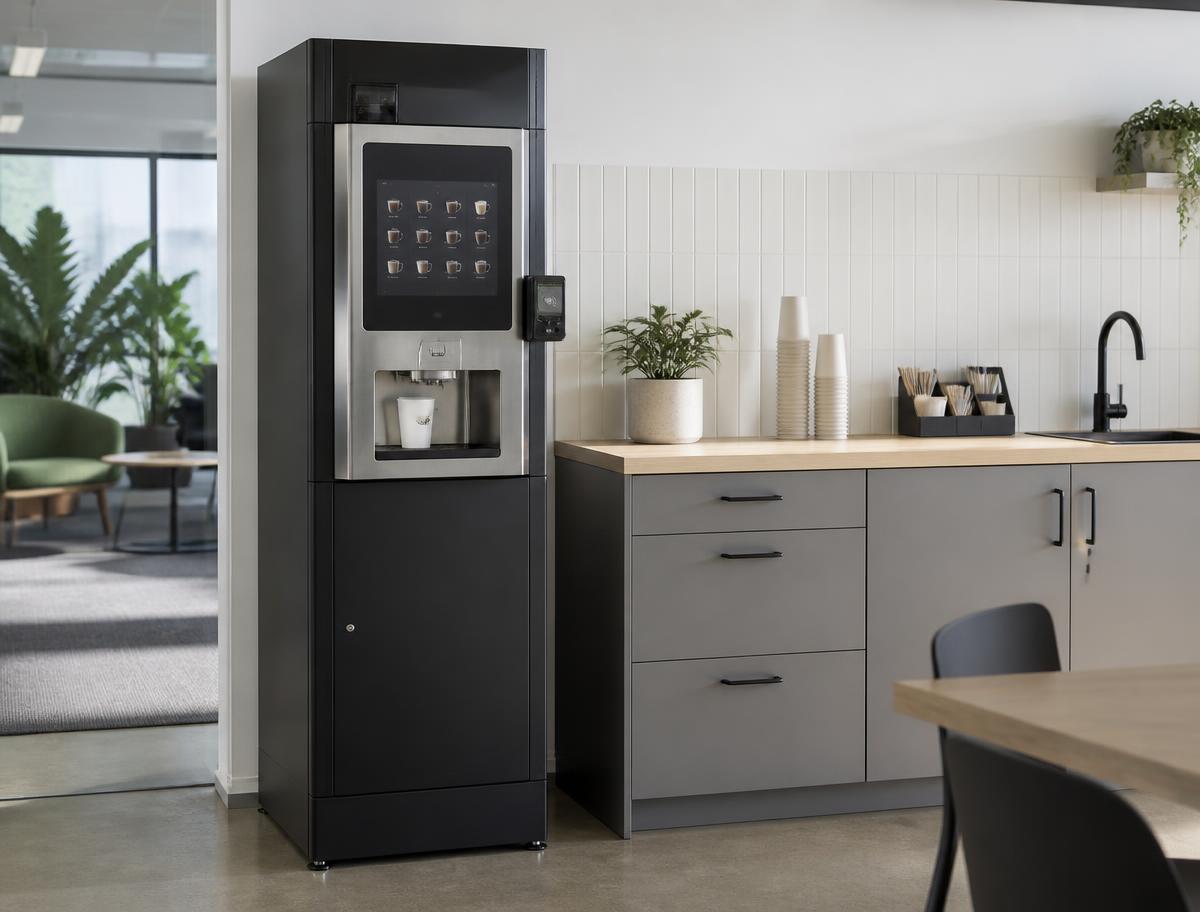
A free-to-use benchtop unit can serve an employer-funded front office or customer area, while a paid freestanding machine needs a payment-capable design and merchant setup. Neither arrangement should be inferred from the word vending in a catalogue heading. Tell the supplier whether users pay and what menu they expect. Ask which drinks require fresh milk, powder or manual work and request output for the proposed mix rather than accepting a generic cups-per-hour statement.
For paid coffee, check connectivity in the final position, request current provider fees and identify the refund contact when the office is closed. Keep ongoing processing and data charges separate from reader hardware. For funded coffee, include ingredients and cleaning in the workplace budget rather than sales revenue. If showroom visitors cannot enter the crew room, prepare a separate brief. Additional coffee points bring additional cleaning and support responsibilities as well as extra equipment cost.
The safe route continues beyond the warehouse entrance
Provide access photographs from the unloading point to the approved lunchroom. Include door widths, turns, ramps and upstairs rooms. A large roller door or loading area does not prove a freestanding cabinet can reach a mezzanine. Agree handling equipment and installer induction with the supplier or transport provider; do not assume site staff can safely move any machine with equipment already in the workshop. Separate delivery handling from active vehicle movements and customer circulation.
Keep coffee preparation indoors, away from production dust and restricted areas, with the manufacturer's clearance and ambient operating limits. If a room is not temperature-controlled, ask for a model-specific suitability check rather than assuming it handles every seasonal condition. Confirm power and water requirements and use qualified trades where needed. Ask whether the delivered price includes positioning, levelling, commissioning and a handover. A courier drop at the entrance leaves those installation questions unresolved.
Early crews and weekend showrooms need replenishment coverage
Write a refill and cleaning routine that works when administration is shut. Name who checks water, ingredients, cups and waste before early shift and who covers a Saturday showroom. Fresh milk needs suitable refrigeration and hygiene according to the model; powdered drinks still need cleaning. Ask for shutdown and restart instructions for long closures, and ensure a responsible contact can stop use after a fault. Automated serving does not remove these practical daily jobs.
If the business prefers an operator or service provider to do the work, request a written schedule, access arrangement and responsibility list. Remote alerts do not replenish supplies or remove waste on their own. Confirm what monitoring the chosen equipment actually supports and who receives the notices. Keep the machine identification, support number and fault procedure accessible to the shift contact. An equipment warranty is not a promise that every consumable shortage or out-of-hours visit will be covered.
Ask about ACT freight for installation and repairs
Compare the machine subtotal, GST, freight origin, unloading, positioning and commissioning on the same basis. Give the supplier the actual Fyshwick or Mitchell postcode, quantity and access brief. Ask where a machine goes if repair requires workshop return and which freight, parts, labour or travel costs remain payable. National sales coverage does not establish a nearby technician, ready ACT stock or immediate attendance. Obtain the service terms before paying, not after a fault occurs.
For USED buying, request current photographs, cleaning history, drink-cycle testing and payment compatibility for the actual offered unit. For NEW buying, confirm the model, options and support scope. FREE placement is assessed separately: the guideline is 25 people on site daily, with suitability and route availability considered, not guaranteed approval or free drinks. Submit the relevant form with the break timetable and site constraints so David can handle the correct request without confusing ownership with operator-managed placement.
Review workshop and showroom coffee separately
Once a Fyshwick or Mitchell machine is operating, record showroom visitors and crew demand separately where they use different units. Note queues, refill intervals and which drinks create the most daily work. A busy Saturday showroom does not prove a workshop needs another cabinet, and a shift change does not predict customer demand. Ask the supplier to review actual output before changing equipment. Trials or replacement machines need an agreement and are not promised by this guide.
Keep a fault log with the model identification, symptoms and refund issues so support can understand repeated problems. Confirm weekend access for the responsible service contact. If the lunchroom relocates or workshop traffic changes, reassess positioning and handling before moving the unit. Another building needs its own water, power, access and cleaning brief. Update quote requests from operating evidence rather than relying on an employment figure, optimistic sales assumptions or an unverified claim of immediate local repair support.
Keep the coffee quote separate from the combo package
The compact new coffee range starts at $990 ex GST ($1,089 including GST), before separately quoted delivery and installation. Larger paid coffee machines are priced by model. Budget ingredients, milk, cups, cleaning, electricity, servicing and payment fees where applicable. That compact starting price is not a complete freestanding paid vending installation.
New combo packages start at $4,990 ex GST including a credit card reader; delivery is separate. That package is not a coffee-machine quote and its reader inclusion does not automatically apply to coffee models. Ask David for a model-specific written offer using your actual site brief. An enquiry is not an order, stock reservation or confirmed installation date.
Frequently asked questions
What should a Canberra coffee quote include?
The exact model, peak drink output, payment and milk system, water requirements, GST, freight, positioning, commissioning and postcode support should be confirmed in writing.
Does this mean there is a Vending Machine branch in Canberra?
No. This is workplace buying and service-coverage guidance. No local partner showroom address is confirmed; ask the proposed supplier about appointments, delivery and support.
Request a coffee quote for your Canberra workplace
Send David your postcode, attendance, peak cups and access brief for an itemised model-specific quote.